Pine tar: Finland’s black gold kept sailing ships afloat and still scents the sauna

Finnish forestry tradition
Pine tar was a major Finnish export from the 17th to the 19th century. What was it needed for, how was it made, and why does its scent live on today?
What did prosperity smell like back then?
Today, a successful company might smell of freshly brewed coffee and a new computer. In Finland, it once also smelled of tar: a strong, smoky substance that clung to hands, clothes and shipbuilding.
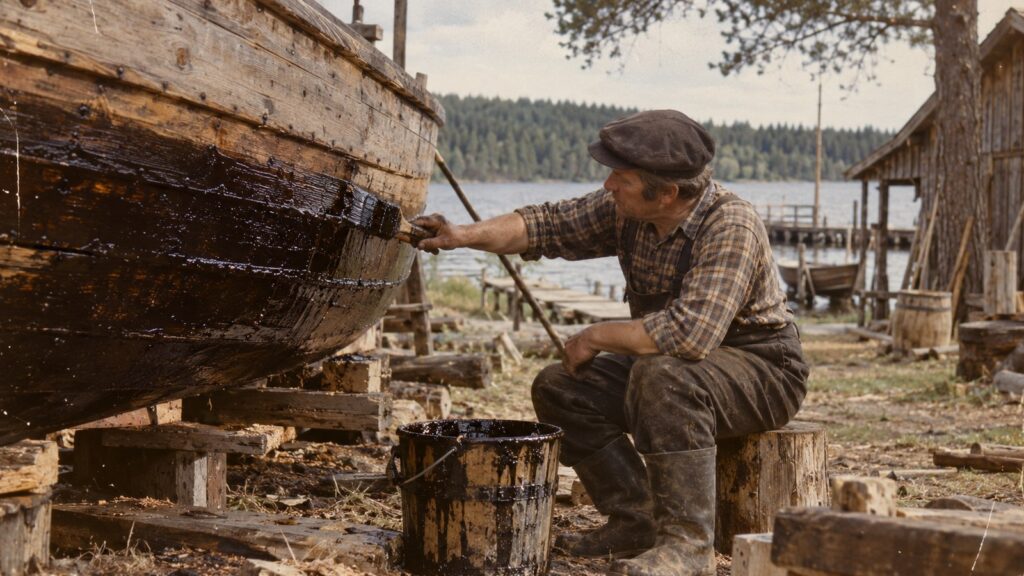
Tar was a major Finnish export from the 17th to the 19th century. According to the National Archives of Finland, it was closely tied to trade, transport and the livelihoods of peasant farmers. Especially in the age of wooden ships, tar and pitch were needed to protect timber structures and ropes.
How did the forest become an export product?
Wood tar is produced by the dry distillation of wood. Traditionally, resinous conifer wood was burned in tar pits, where it was heated in a controlled way with little oxygen. Making tar was hard work and required skill, time and good organisation.
From Kainuu, tar was transported along waterways to Oulu, from where it was shipped around the world. This is a Finnish engineering story from before engineering degrees: the forest held a raw material that the world’s shipping needed, and a production and transport chain was built around it.
Why didn’t tar disappear?
As wooden ships lost their importance and new materials became common, tar’s great industrial era faded. The substance itself lived on, however, in traditional building, wooden boats and in the scents and flavours Finns associate with home.
There is an old folk-medicine saying about tar, but it is not medical advice. Strong tar or tar products should not be used as a substitute for healthcare. It is another good reminder that tradition and research are not the same thing.
Why did tar become a trade commodity?
Tar was more than a wood preservative. Making it was part of how peasant farmers earned a living, and moving large batches required waterways, storage and merchants. Shipbuilders needed a product that the inland forests could supply. That is why this black, sticky substance linked Finnish villages to Europe’s trade routes.
The story is also a good example of how an invention is not always a single device. Sometimes the most significant know-how lies in production methods and distribution. The work done at the tar pit showed up around the world in places where the makers’ names were probably never known. The next time you smell tar in a sauna product, it is not just a nostalgic aroma but a reminder of an entire livelihood.
Hilavitkutin’s reality check
Tar is hard to call trendy: it is black, sticky and smells so strong that your neighbour knows exactly what you are up to. Then again, it helped build centuries of trade that travelled much further than Finns usually manage to go with small talk.
If you fancy trying the tradition yourself, the safest place to start is a tar-burning demonstration at a local museum. A tar pit is not something you set up in your back garden on a whim.
Read more: Anatomy of a puukko: from tang to pommel – and what Finnish law says about carrying one and From sauna stove to world market: what Finnish sauna technology actually invented. You can find every story in the series on our Finnish Oddities page.
Sources
- National Archives of Finland – tar burning and the tar trade (in Finnish) (checked 1 Nov 2026)
- Visit Finland – must-have souvenirs from Finland (in French) (checked 1 Nov 2026)