PLA, PETG, ABS or TPU? A beginner’s guide to 3D printing materials

Buyer’s guide
A print can look great but melt in the car, or be tough but tricky to print. Choose the plastic by what the object will be used for, not by its colour.
3D printing at home – part 4/5
One spool doesn’t suit everything
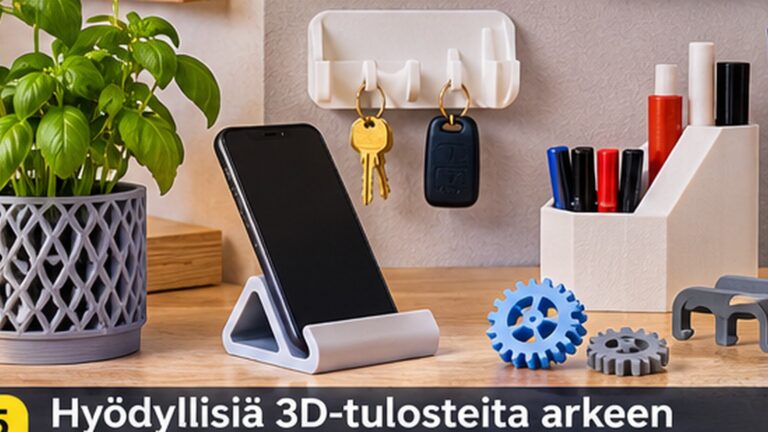
Your first 3D-printed phone holder is easy to make from PLA. When the same holder is left on the dashboard of a car in the summer heat, the hobbyist may learn a new term: heat deformation. In practice it means the holder can acquire a modern design without its owner’s consent.
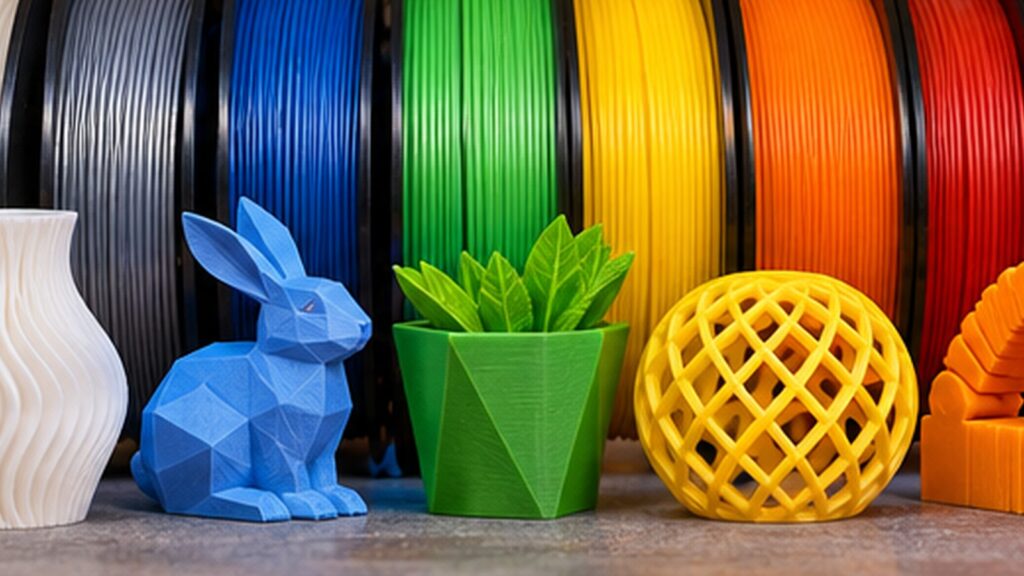
There is a huge range of 3D printing materials, but a beginner does not need to learn them all. Five names are enough to start with: PLA, PETG, ABS, ASA and TPU. The differences come down to ease of printing, toughness, heat resistance, outdoor use, and what kind of equipment or ventilation is needed to use them safely. Exact temperatures vary by filament and printer, so the manufacturer’s profile and the product datasheet always come first.
PLA – pretty and easy, but not for heat
PLA is a good choice for a beginner’s decorations, desk organisers and indoor prototypes. On many printers it sticks reliably to the bed, it usually does not need a closed heated chamber, and it comes in a wide range of colours.
PLA’s weakness is heat resistance. It is not the material for a hot car, a sauna, near hot water or for a load-bearing part. Being biodegradable does not mean a PLA object will simply disappear in a home compost bin either. Print emissions still need attention, even though the material is often easier to print than many technical plastics.
PETG – the favourite for everyday items
PETG is the general-purpose plastic of many home workshops when an object needs more toughness and tolerance to temperature changes than PLA offers. It suits drawer organisers, small mechanical brackets and low-risk accessories, for example. Different PETG grades behave differently; the name alone does not prove that a product is suitable for drinking water, for instance.
PETG’s downside is occasional stringing: thin plastic cobwebs left between parts of the print. The print profile, dryness and temperature help. PETG can also bond very strongly to some smooth surfaces, so follow the bed manufacturer’s recommendations and use a release layer if needed.
ABS and ASA – stronger solutions, higher demands
ABS is a familiar engineering plastic used in many kinds of industrial products. It often needs a heated enclosure so the part does not warp or come loose from the bed as it cools. Emissions during printing are a significant factor to consider, which is why it should not be treated as just the next colour option in an ordinary open home environment.
ASA has similar properties to ABS but withstands UV radiation better, which makes it suitable for many outdoor parts. Printing ASA also usually requires temperature control and proper exhaust ventilation. A closed enclosure does not yet mean that emissions are safely kept out of the air you breathe. Use the material manufacturer’s information, the printer’s instructions and a ventilation solution that has been shown to work.
TPU – rubbery objects
TPU is a flexible filament. It can be used to make soft covers, shock-absorbing parts and grippy feet, for example. Hardness is often given on the Shore A scale, and two spools of TPU can behave very differently when printing.
A flexible filament is harder to feed than stiff PLA, so start with a TPU profile tested by the printer manufacturer and lower speeds. Not all multi-material feeding systems support TPU, so check the filament path in advance.
Which material should you choose? A quick practical guide
Decorative indoor object: PLA. Indoor tool holder or a part that takes the odd knock: PETG. Object exposed to light and weather outdoors: a suitable ASA, if your print space and equipment support it. Flexible cover or non-slip foot: TPU. Demanding special use with high loads or heat: do not guess based on the material – work out the design and material requirements separately.
Do not print parts directly for food use, safety-critical electrical devices, pressurised systems, vehicle safety structures or fixings that carry a person’s weight without proper design and approval. A normal FDM surface contains gaps between layers, and “food-safe filament” alone does not make the whole print hygienic or approved for food use.
Remember moisture and storage
Many filaments absorb moisture from the air. Moisture can show up as popping at the nozzle, a poor surface and stringing. Store spools in closed boxes with desiccant and use a drying method that is safe for both the material and the spool. Do not improvise with the oven or a hot sauna.
Hilavitkutin’s material test ends like this: PLA works when you want to make something nice. PETG works when you also want to use it. ASA works when the object has to go outside. TPU works when the part needs to bend. And ABS works when you already know well enough why you chose it.